
TLDR
- Parent preference is about routine, not love. Your child's brain fixates on the specific way one parent does bedtime. The octave of the lullaby, the order of the books, the exact weight of the blanket tuck. Swapping parents disrupts all of it at once.
- Letting your child choose which parent does bedtime makes it worse. It feels easier in the moment, but it accelerates burnout for the preferred parent and erodes the other parent's confidence and bond with the child.
- A visual chart turns an abstract concept into something concrete. Toddlers cannot hold 'taking turns' in their heads. A chart with parent photos on alternating days makes the system visible, fair, and verifiable.
- Pushback is expected and is not a sign of failure. Your child will cry. They will ask for the other parent. That is resistance to change, not proof that the approach is wrong.
- Playfulness is the shortcut the non-preferred parent needs. A silly face, a made-up song, a secret handshake. Kids bond through laughter faster than through perfect routine replication.
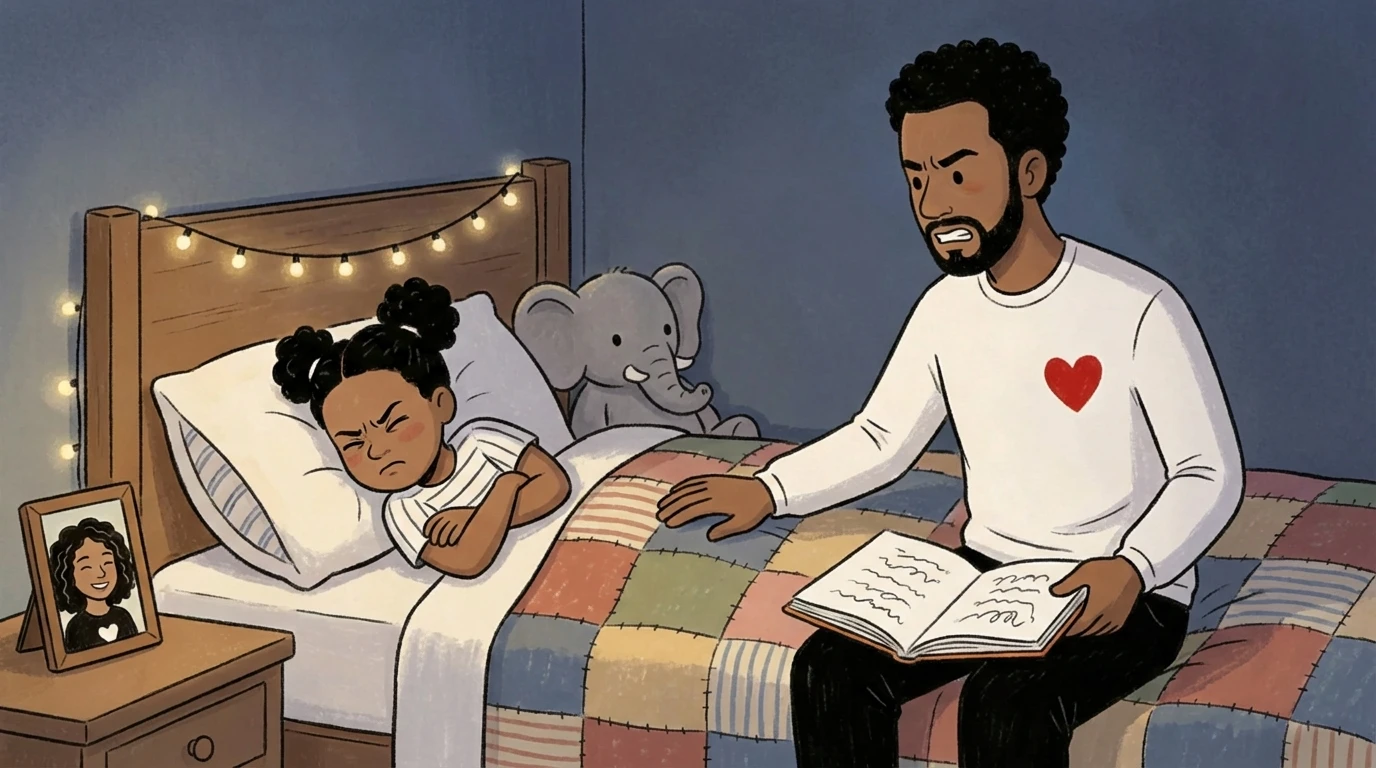
Why your child only wants one parent at bedtime
Your toddler doesn't hate you. Their brain has built a very specific recipe for falling asleep, and you are not one of the ingredients.
When one parent does bedtime consistently, the child's brain encodes every detail of that experience. The pitch of the singing voice. The pressure of the back rub. The way pages get turned. When the other parent steps in and does the same routine, the child's brain flags every micro-difference as wrong. Not dangerous, just wrong enough to prevent relaxation.
This is preference for a specific bedtime experience, not preference for a specific person. The child doesn't have the language to say "you turn pages too fast and your voice is different." What comes out instead is screaming and "I want you, not them."
Three things typically drive parent preference at bedtime:
Routine attachment
The preferred parent has a style. The voices during story time, the exact lullaby verse order, the weight of the blanket tuck. The child's brain has locked onto these details like a combination lock. Change one digit and it won't open.
Daytime exposure patterns
This goes both directions. A child who spends all day with one parent may want them at bedtime because the brain craves continuity. Or the preferred parent may be the one gone all day, because the child missed them and bedtime is their only window. Either pattern produces screaming when the wrong parent shows up.
The power bucket is empty
By bedtime, your child has been told what to eat, wear, and do for an entire day. Their sense of control is depleted. Demanding a specific parent is one of the few power moves left.
Wrong parent at the door
The Sleep Solutions course will help you break the one-parent lock
You'll transition bedtime duty between parents without the meltdown, so either of you can tuck them in.
The mistake almost every family makes
The path of least resistance is letting the child pick. If she wants one parent, that parent does it. If he wants the other, that parent does it. Problem solved, everyone stops crying, bedtime happens.
Here's what that produces over time:
The preferred parent burns out. They become the only person who can do bedtime, bath time, and eventually every nighttime wake-up. Their partner sits downstairs feeling useless while they handle the fourth call-back of the evening. The unequal load grinds on the relationship.
The non-preferred parent loses confidence. Each rejection chips away at their belief that they can do this. They stop trying. The child notices the withdrawal and doubles down on the remaining parent.
The child gets a job they can't handle. Toddlers who control major household decisions don't feel powerful. They feel anxious. A two-year-old deciding which adult does what is a two-year-old running a ship they have no idea how to steer. Kids feel safer when the adults make the big calls.

How to break the one-parent lock
You change one routine at a time. Not bedtime and bath time and story time all at once. Pick the one that matters most and leave the rest alone for now.
How to transition bedtime between parents
- Pick one routine to changeChoose bedtime or bath time, not both. Changing everything at once overwhelms the child and makes it impossible to tell what's working. Start with the routine that creates the most imbalance in your household.
- Prep your child during the dayTell them what's changing before it happens. 'Starting tonight, we're taking turns with bath time. Tonight is daddy's turn.' Repeat it multiple times. Toddlers need previews, not surprises.
- Make a turn-taking chart togetherList the days of the week with a photo of each parent on alternating days. Let your child help decorate it. The chart becomes the authority, not either parent. When your child asks who does bedtime tonight, point at the chart.
- Give your child a real jobLet them check the chart, point to whose turn it is, and place a sticker on the completed day. This redirects their need for control toward something they can handle instead of who does what.
- Validate the feelings, hold the boundaryWhen they cry for the other parent, say: 'You want the other parent tonight. That makes sense. Tonight is daddy's turn. Their turn is tomorrow. Do you want the blue pajamas or the green ones?' Name the feeling, state the plan, offer a small choice.
- Reinforce after every sessionWhen it's over, say: 'I had fun with you tonight. Tomorrow is their turn, and then it'll be my turn again.' Previewing what comes next reduces anticipatory anxiety for the next evening.
The chart is doing more work than you think. "Taking turns" is an abstract concept for a toddler. They cannot hold it in working memory. A physical chart with faces and stickers makes fairness visible and verifiable. Your child can walk up to it and confirm the plan themselves, which satisfies the same control need that was driving the parent preference.
What the non-preferred parent should do
Stop trying to replicate the other parent's routine. You will never sing the lullaby at the same pitch or do the character voices the same way, and every attempt reminds your child of what they're missing.
Instead, build something that belongs only to you. A ridiculous made-up song. A secret handshake that takes 45 seconds. A specific game you play only at bedtime. The goal is to be a different, equally good option.

Ask your child what they like about the other parent's routine. Genuinely, not defensively. Sometimes the answer reveals something fixable. Sometimes the answer is just crying. That's fine too. You asked, and asking shows them they're heard.
When the tears come (and they will)
Your child will protest. Maybe for three nights, maybe for two weeks. The tears are about the change, not about you being a bad parent. Hold the line. Stay boring and predictable. Don't escalate your energy to match theirs.
The script for the hard moments: "You feel sad because it's not their turn. It's okay to feel sad. Tonight is my turn. Tomorrow is their turn. Do you want to read the dinosaur book or the truck book?"
Name the feeling. State the boundary. Preview what comes next. Offer a small, real choice. Repeat as many times as necessary. Tears during bath time or bedtime are acceptable and do not mean the strategy is failing.
Why this matters beyond bedtime
When you hold the boundary through the protests, you're teaching your child something bigger than sleep logistics. You're teaching them that things don't always go their way and they can handle it. That's a skill they'll use every time a transition doesn't go according to plan.
You're also protecting your relationship. When one parent carries the invisible weight of every bedtime, resentment builds. Sharing bedtime duty keeps two functioning adults in the house, instead of one burned-out parent and one who feels sidelined.
The developmental timeline (it does end)
Parent preference peaks in the toddler years and typically softens between ages five and seven. Three things change during that window:
Emotional regulation develops. Your child starts being able to tolerate disappointment without a full meltdown. The protests get shorter and less intense.
Logic comes online. A three-year-old cannot process "daddy reads the same book, so there's no reason to be upset." A six-year-old can. Until then, skip the logical explanations during emotional moments. They cannot hear them.
Both-and thinking replaces either-or thinking. Young children operate in absolutes. Older children can hold two feelings at once: "I wish the other parent was doing bedtime tonight, and daddy's dinosaur voices are pretty funny."
The strategies above work right now. Knowing the developmental trajectory just helps on the hard nights when it feels like this will last forever.

FAQ
Most families see a big drop in protest intensity within one to two weeks of consistent turn-taking. The first three nights are the hardest. If you hold the boundary without caving, the child adjusts faster than you expect. Full acceptance of either parent typically takes three to six weeks.
It helps for the first few nights. If the preferred parent is audibly in the next room, the child knows screaming loud enough might bring them. When the preferred parent is genuinely gone, the child accepts the current situation faster. After the pattern is established, this becomes unnecessary.
Completely normal. Parent preference often flips after major transitions like starting daycare, a new sibling arriving, or one parent traveling for work. The same strategies apply regardless of which parent is currently preferred. The flip itself is proof this is about circumstances, not about love.
The opposite. A child who screams when you leave and demands you back is showing that you are a source of safety. The attachment system is working correctly. Your child feels safe enough to express big feelings to you, which is a sign of secure attachment, not a problem to fix.